



 DOI : 10.17577/
Manual spreadsheet-based scheduling struggles to keep pace with rising clinical placement demand.
U.S. nursing schools turned away a record 93,176 qualified applicants in the 2025-2026 academic year, according to the American Association of Colleges of Nursing (AACN). That number isn’t a shortage of interested students. It’s a structural bottleneck in faculty availability and clinical placement capacity, and it raises a research question worth taking seriously: can better scheduling systems meaningfully expand usable capacity within the constraints programs already face?
This isn’t a funding story alone, and it isn’t purely an admissions story either. It’s an operations and workforce-logistics problem, one that sits closer to systems engineering than to traditional education policy. Understanding why programs are turning away qualified applicants, and where the inefficiency actually lives, points toward a more immediate fix than waiting on new appropriations or new faculty hires.
Why Nursing Programs Are Turning Away Qualified Students
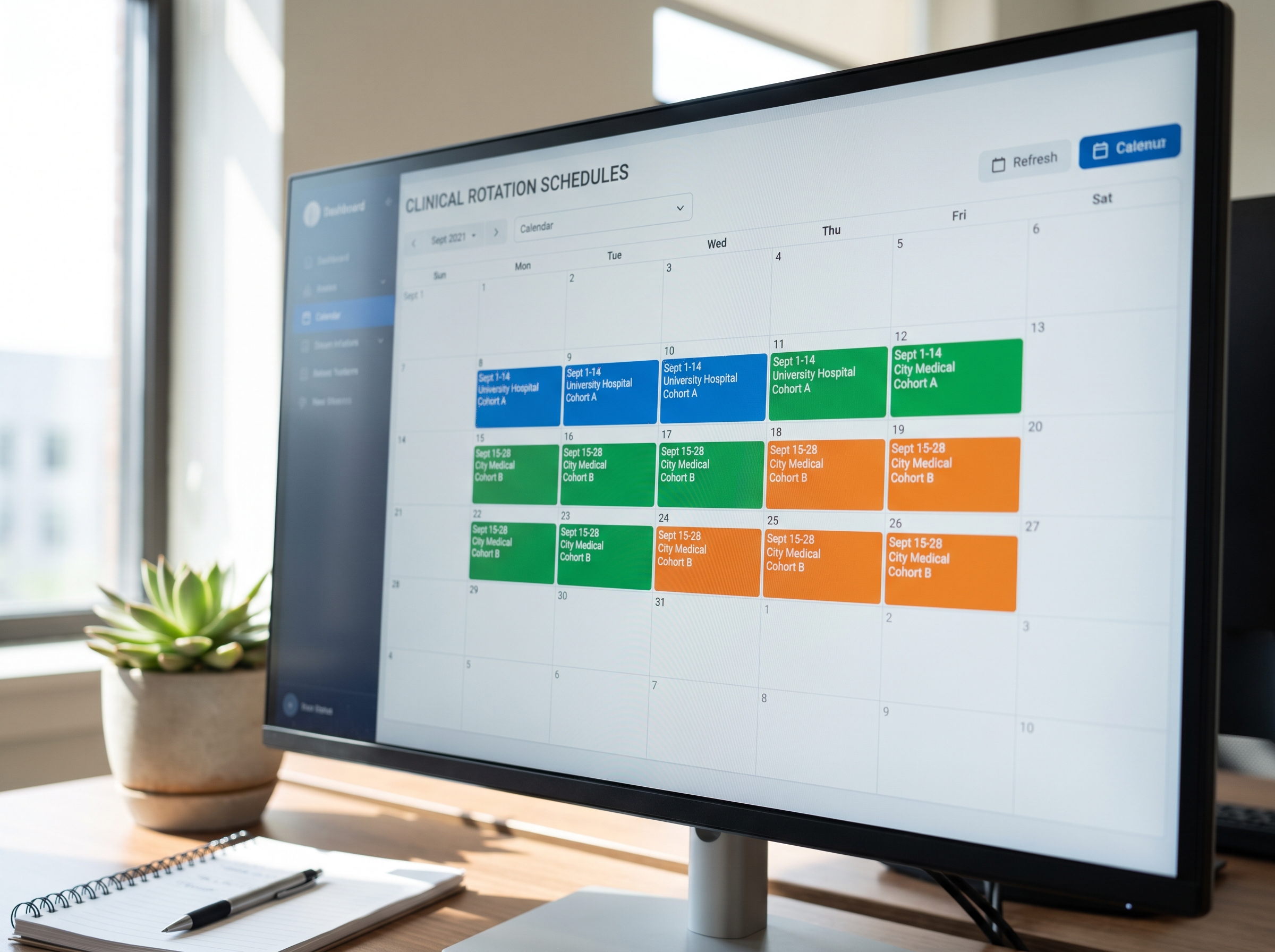
A centralized scheduling dashboard mapping student rotations across multiple clinical sites in real time.
The AACN’s 2025 survey of nursing schools found a national nurse faculty vacancy rate of 8.8%, representing more than 1,600 unfilled faculty positions. Each unfilled position translates to roughly 8 to 10 fewer students admitted, which alone accounts for a meaningful share of the applicants turned away last year. Compounding that, more than one-third of nursing faculty are over age 60, and many are expected to retire by the end of 2025, so the vacancy problem is set to get worse before it gets better.
Faculty supply is only half the equation. Over 60% of nursing programs cite a lack of clinical placement sites as a major barrier to expanding enrollment, per AACN data. Hospitals and clinics have finite rotation capacity, and multiple nursing schools frequently compete for the same units, the same shifts, and the same preceptors. That means clinical placement capacity, not just the faculty roster, is a hard constraint programs have to optimize around rather than simply expand their way out of.
This is where scheduling infrastructure starts to matter as much as headcount. Administrators managing this bottleneck are increasingly turning to dedicated student placement scheduling systems to make fuller use of the limited clinical slots they already have, rather than losing capacity to double-bookings, unclear availability, and administrative overhead that has nothing to do with actual training quality. When the constraint is fixed clinical capacity, the return on better allocation logic is direct: more of the slots a program already has access to actually get filled by a matched, compliant student.
The Hidden Cost of Manual, Spreadsheet-Based Placement Management
Most placement coordination still runs on spreadsheets, email threads, and phone calls. That setup creates version-control errors, where two coordinators unknowingly assign the same slot to different students, and it creates wasted clinical hours when a mismatch isn’t caught until a student shows up to a site that wasn’t expecting them. These aren’t minor inconveniences. They compound an already tight capacity problem by burning slots that could have gone to another qualified student.
Rotation Manager, a clinical placement software vendor, reported a case study in which one large multi-site clinical rotation network saw a 27% reduction in administrative support time after moving off spreadsheets and email onto a centralized scheduling platform. That’s staff time freed up to coordinate more placements, not fewer, which is exactly the kind of efficiency gain a capacity-constrained system needs.
The pattern isn’t unique to nursing education. Healthcare operations broadly have been moving away from manual, siloed coordination toward centralized digital systems for years. Our own published research on web-based healthcare coordination systems examines how digital platforms reduce scheduling conflicts and improve resource utilization across care settings, a dynamic that maps directly onto the clinical placement problem nursing programs are wrestling with now.
How Data-Driven Scheduling Systems Expand Effective Capacity
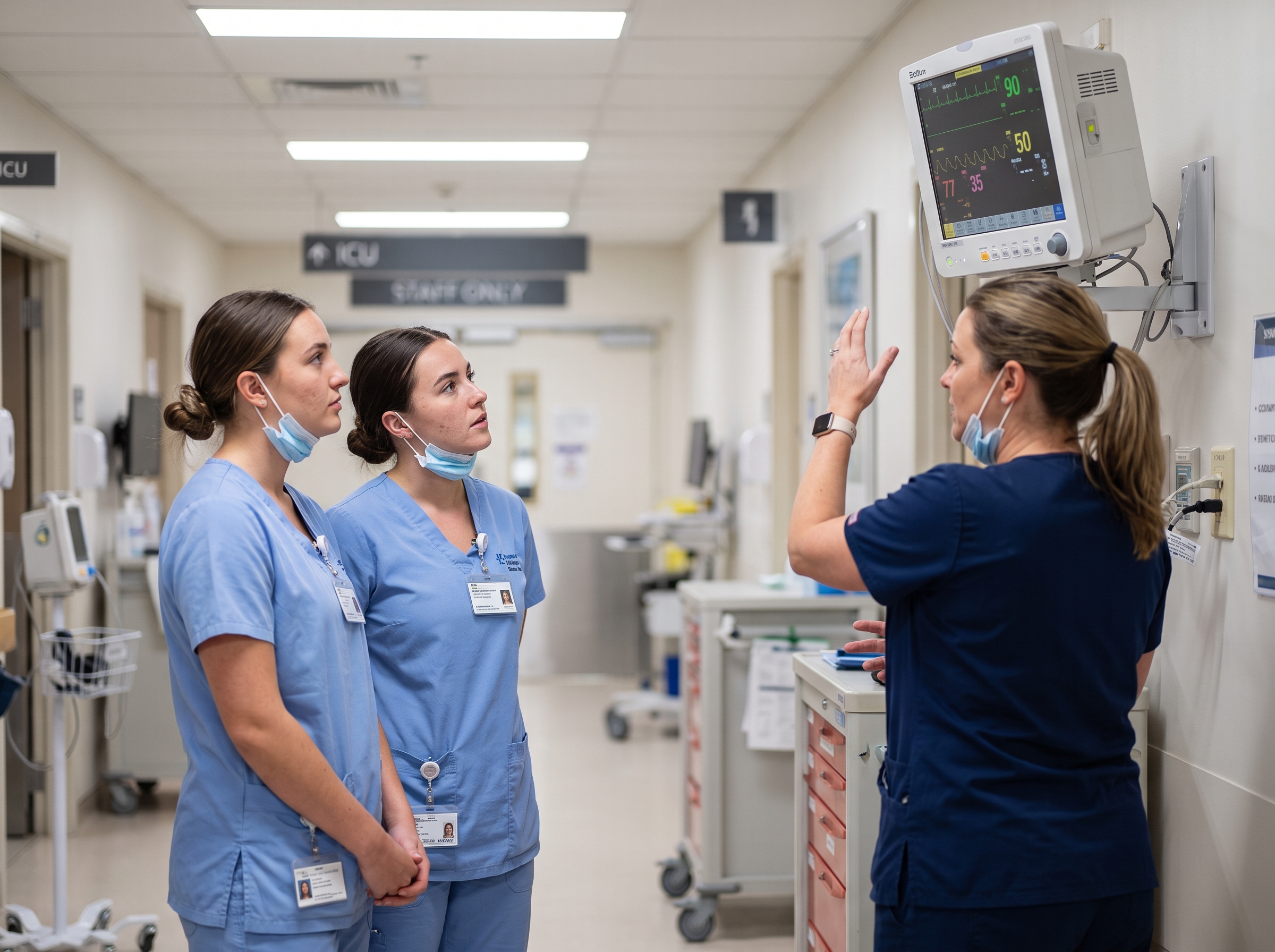
Limited clinical site capacity remains one of the biggest bottlenecks to expanding nursing program enrollment.
From a systems standpoint, a centralized clinical placement platform functions as a real-time allocation engine rather than a passive record-keeping tool. It gives coordinators live visibility into which clinical slots are open, at which sites, and for which specialty rotation, so unused capacity doesn’t sit invisible in someone’s inbox. It can automatically match student cohorts to compliant sites based on program requirements, immunization status, and background-check timelines, cutting down on the manual cross-referencing that eats coordinator hours.
Compliance and credential tracking matters more than it might seem at first glance. A single lapsed immunization record or an expired background check can force a last-minute cancellation, and that cancelled slot often goes unfilled for the rest of the rotation cycle. Automated tracking catches these gaps before they turn into lost capacity. The same systems also generate audit-ready documentation for accreditation reviews, which removes another layer of manual administrative work from already-stretched program staff.
This is, in effect, the same digitization logic hospitals have already applied to patient scheduling. Our coverage of automated hospital appointment and booking systems looks at how healthcare organizations replaced manual booking processes with database-driven platforms to reduce no-shows and improve throughput. Applying that same logic to student clinical placements, treating each open rotation slot the way a hospital treats an open appointment slot, is a natural extension rather than a novel idea.
Policy and Funding Context
It’s worth being clear about what scheduling technology can and can’t fix. Federal Title VIII Nursing Workforce Development funding, which supports clinical placement infrastructure among other things, was set at $305.47 million for fiscal year 2026, well below the $530 million nursing advocates say is actually needed. New money would help build more capacity over time: more faculty positions, more formal partnerships with clinical sites, more simulation labs to supplement in-person rotations.
But funding increases take years to translate into usable capacity, and the current cohort of 93,176 turned-away applicants can’t wait for a multi-year appropriations cycle to play out. Operational efficiency in placement scheduling is a necessary complement to policy solutions, not a substitute for them. Programs that tighten how they use the clinical capacity they already have can absorb more students today, while advocacy for better funding continues in parallel.
Conclusion
The nursing education capacity crisis is as much a logistics problem as it is a funding problem. Faculty vacancies and clinical site shortages are real and serious constraints, but a meaningful share of the capacity lost each year disappears through scheduling conflicts, manual errors, and administrative overhead rather than through any hard ceiling on physical slots.
Programs that adopt data-driven placement scheduling can extend the reach of scarce clinical capacity, admit more of the qualified students currently being turned away, and build a more resilient pipeline heading into the next several admissions cycles. Given how slowly funding and faculty pipelines move, tightening the operational side of clinical placement may be the fastest lever nursing programs have available to them right now.

