


 DOI : 10.17577/
A two- or three-person marketing team can have a launch, two ads and a feed to fill in the same week, with no studio, no voice actor on retainer and no spare afternoon to re-record every version. This week-long workflow shows how one voice clone covers all of it: clone once on Monday, approve one script, then turn that script into ads, explainers and social videos without booking another recording session.
Monday Morning: Clone Your Voice Once with Pollo AI, Then Stop Recording
Most small teams do not lack ideas. They lack recording time. Every new ad, explainer and social cut normally means another quiet room, another take and another edit, squeezed between everything else on the calendar.
Monday morning is where that pattern breaks. Instead of recording five separate pieces during the week, the team records one short sample, builds one clone and works from text for the next four days. The whole setup takes three moves:
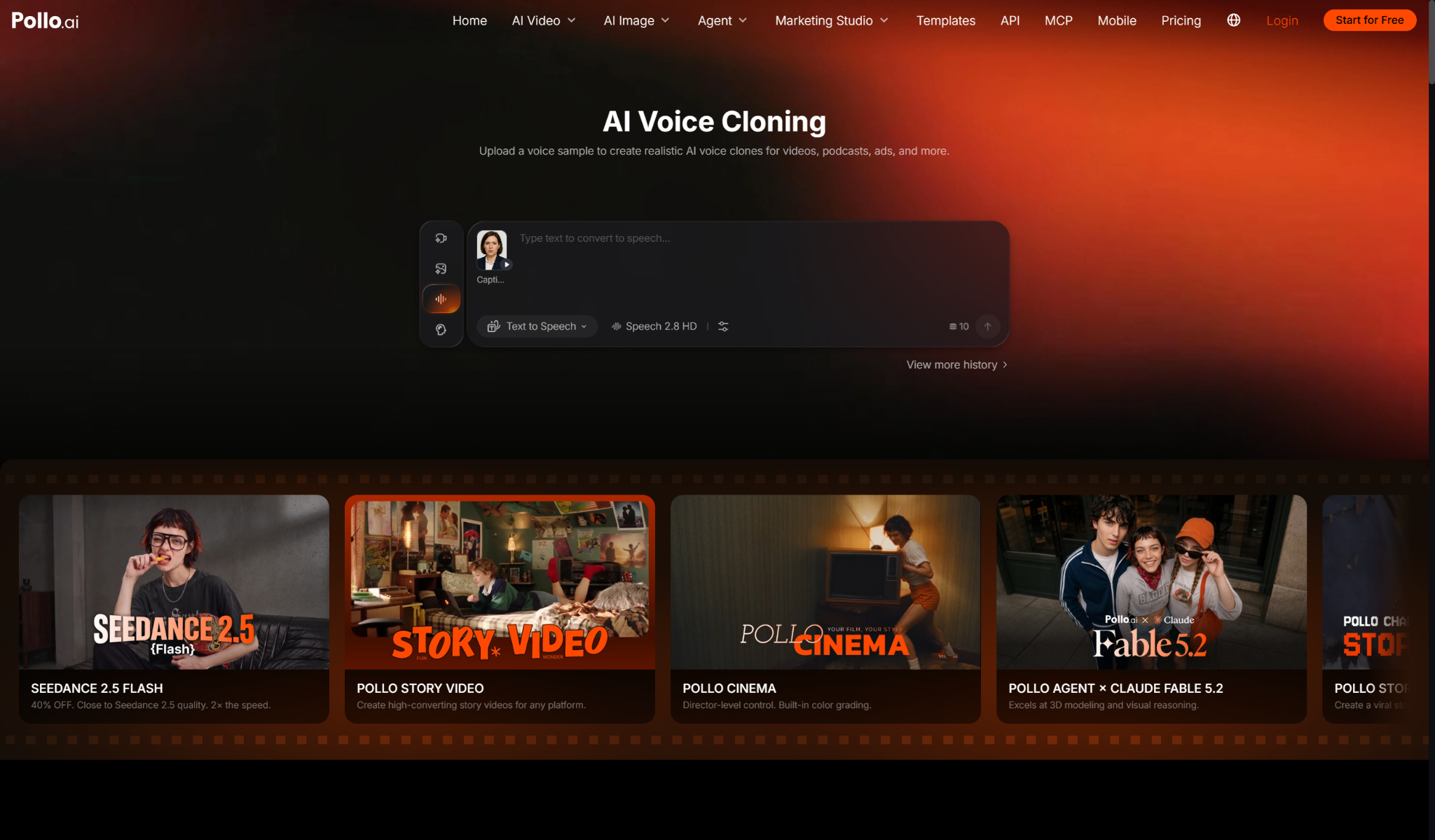
1. Record one clear sample. A quiet room, your usual microphone and a few seconds of natural speech are enough for Pollo AI to analyse the voice.
2. Create the clone once. On Monday morning the team can create realistic AI voice clones in Pollo AI and reuse that single clone for every script that follows, all week long.
3. Approve one script for the week. Write the launch message once, get it signed off once, and let every format start from the same approved words.
A good clone is not a flat robot voice. It preserves your natural tone, emotion and personality, so the person who knows the product best still sounds like themselves in every piece — just without standing in front of a microphone each time.
The free plan includes 20 credits, so the team can clone one voice, generate Monday’s first script and listen before spending anything. A paid plan simply gives you more room once the workflow proves itself.
One Script, Three Formats from One Voice Clone
With the clone ready and the script approved, the rest of the week becomes a formatting job, not a recording job. The same words can be paced, trimmed and paired with different visuals, while the voice stays identical across every version.
· Video ad: Generate the full narration from the approved script and place it over product footage or a generated video for Tuesday’s launch ad.
· Explainer: Use the same narration at a steadier pace for the how-it-works video on your product page, where viewers need detail rather than urgency.
· Social cuts: Trim the script into two or three short lines, generate those versions in minutes, and publish vertical cuts for the feeds on Thursday.
The launch post itself can go one step further.
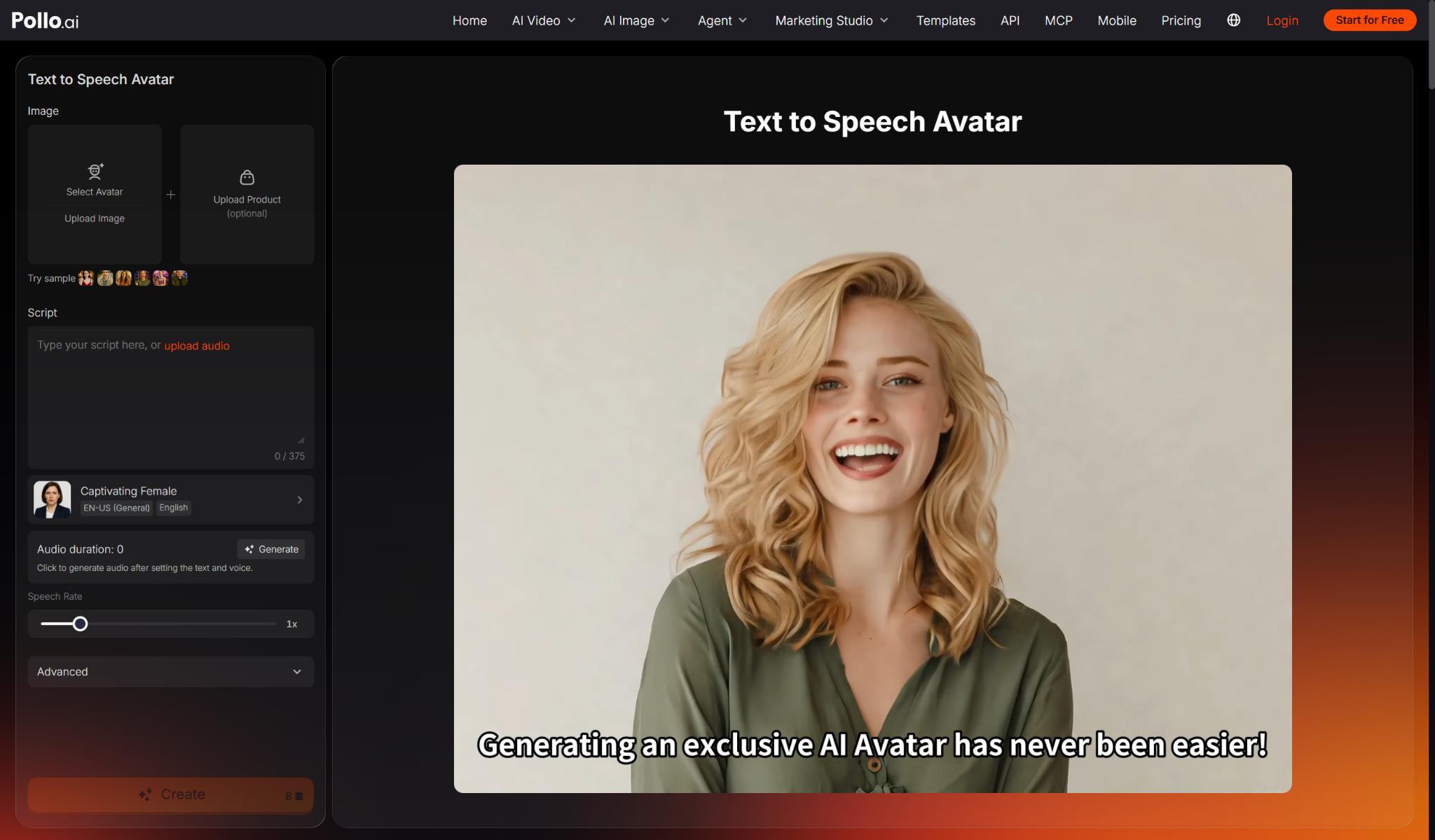
Instead of only hearing the voice, the team can turn the same script into a talking presenter video for the announcement, so one approved script yields both a voiceover ad and a presenter-led explainer that puts a face to the message.
The same setup also helps when the week includes more than one market.
Pollo AI supports speech in 20+ languages, including English with regional accents, Spanish, Mandarin, French, German and Japanese, so a translated version of the script can keep the same familiar voice instead of starting again with a new speaker.
This is where using one creative suite matters.
Pollo AI brings multi-model video, image, digital human and audio tools together in one platform, so the voiceover drops straight into the video project and the team is not exporting audio from one app, video from another and captions from a third just to ship a single post.
If the week also needs a second voice — a customer line, a different presenter — the library of 100+ AI voices covers it without another recording session.
The Week at a Glance: Your Voice Clone Schedule
None of this needs a complicated production calendar. For a small team, the week can look as simple as this:
| Day | What goes out | What the clone does |
| Monday | Nothing yet — setup day | Clone is created; the week’s script is approved |
| Tuesday | Narrated video ad | Full script is generated as the ad voiceover |
| Wednesday | Product explainer | Same script is generated at an explainer pace |
| Thursday | Two or three social cuts | Short lines are generated as fresh versions |
| Friday | Presenter video and weekly review | Launch script becomes a talking presenter video; results are reviewed |
Notice what is missing from that schedule: recording. There is no daily setup, no matching yesterday’s microphone position and no panic session when a line changes on Thursday.
If the offer, the date or a product name changes, the team edits the text and generates that line again in the same voice.
That text-first habit is the real time-saver. A script change that once meant re-booking a room and hoping the new take matched the old one now takes minutes, and the published pieces still sound like they were recorded in one consistent session.
Ready to Turn One Voice Clone into a Week of Content with Pollo AI?
If your team keeps postponing video because nobody has time to record, try the Monday version of this workflow. Record one clear sample, clone the voice once and see how much of the week’s content one approved script can carry.
The cost case is just as simple: no studio sessions, no voice actor bookings and no repeated retakes — just one reusable voice inside the creative suite your team already uses for the visuals.
Start with Pollo AI’s free plan this Monday, and let one voice clone handle the talking for the rest of the week.


Saved this, thanks
Practical write up on turning one voice clone into a week of ads and explainer clips. The production workflow and reuse patterns are useful, but it would help to discuss quality drift over many clones and simple checks to avoid fatigue artifacts.