


 DOI : 10.17577/
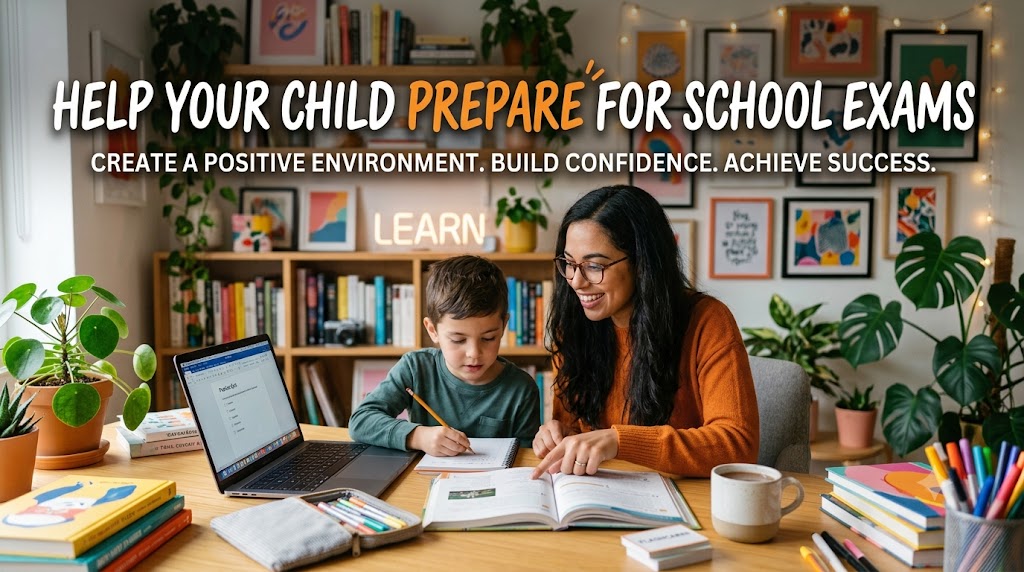
Examination times can be challenging for both children and their parents. Although grades matter, making sure your child feels prepared and believes in their abilities is equally important. Proper support at home can create a positive environment, reduce stress, and encourage healthy study habits.
In fact, the OECD’s Survey on Social and Emotional Skills (2023) found that about half of 15-year-old students worry about tests, while around two-thirds worry about getting poor marks or failing in school.
Not all children learn in the same way, so there is no single method that works for everyone. Instead of putting pressure on your child, focus on creating a positive routine that encourages preparation, organization, and confidence.
Why Your Child Needs You During Exams
Children tend to seek motivation and assurance from their parents, especially during the days leading up to an exam. Creating a calm home environment will ensure that they remain concentrated on their work.
Parents do not have to be knowledgeable about all subjects in order to help their children during exams. Showing interest, making sure they allocate enough time for revision, and encouraging them will ensure that they remain determined.
1. Plan a Reasonable Study Timetable
A revision timetable helps your child know which subjects to study each day, rather than trying to revise all subjects at once. Create a timetable together that includes all subjects, homework, revision sessions, breaks, and relaxation time.
It is better to begin the revision process a few weeks before the examinations, as cramming all the work into the days just before the exams is usually not very effective. Study sessions should be short and focused, with breaks between sessions.
Children in primary school often benefit from shorter study sessions, typically lasting 20 to 30 minutes, while teenagers may be able to study for longer periods. If your child prefers digital learning resources, you can also use a PDF to quiz tool to turn study notes, worksheets, or textbooks into interactive quizzes for more engaging revision.
2. Create a Relaxing Environment for Studying
A quiet and well-organized environment will allow kids to study better since they can focus on their studies without being distracted. You should pick a spot where there is sufficient light and there is enough room to keep all the things necessary for studies, such as books and stationery.
It would help if you made sure there are no distractions, like the TV being turned off, and that the phone is not being used unnecessarily when the kid is studying on the computer.
3. Divide Revision into Small Sections
A complete textbook can seem quite daunting before any examination. Dividing the process into small parts can help make the process of learning less daunting. As opposed to having your child revise the entire chapter at once, divide it into small sections and allow him/her to have breaks in between after completing each small section.
Some of the simple revision techniques can make the process of learning quite fun. Your child can make flash cards, drawings, summarize, and even talk about what he/she is learning as if he/she were teaching others.
4. Promote Practice through Previous Year’s Exam Papers
The previous year’s exam papers will enable your kids to get acquainted with the kind of questions that might appear during their exams. It will also enable them to develop time management skills.
For subjects that require written answers, a grammar checker can also help your child improve clarity and correct language mistakes while practicing.
You should encourage your kid to solve the previous papers as much as possible, and you should ensure that she does this as close to the exam environment as possible. Once done, analyze her performance without being too critical.
She needs to know what she did wrong.
5. Ensure That Your Child Is Organized
Being organized during exam preparation will make the process easier. You should ensure that your child has his study materials, such as textbooks and class notes, organized to make it easy for him to access what he needs when studying.
Using a checklist is a useful way to help your child organize his activities, such as revision. Your child should be taught to concentrate on one thing at a time rather than multitasking. Setting small goals will help them achieve the desired results.
6. Encourage Healthy Behavior While Studying for Exams
Healthy behavior helps in becoming productive while studying. Ensure that your kid is getting enough sleep at night, eating well-balanced meals, drinking lots of water, and taking breaks during the revision process.
An exhausted or an empty-stomach kid will have difficulties concentrating and remembering things. Exercise is equally important. Your kid should take a short break for a walk, a cycle, or to play a game outdoors.
7. Manage Exam Anxiety and Boost Confidence
Children often get stressed prior to taking their exams, but this could interfere with their performance. Help your child express their fears and tell them that exams are not the only way to assess what they have learned.
Compliment your child’s efforts instead of concentrating solely on results. Celebrate your child’s successes, be it completing a revision lesson, scoring better on a test, or mastering a complicated subject.
8. Being Positive Without Pressurizing
Most times, children pick up cues about how their parents are behaving during exam periods. It is therefore very important for you to stay relaxed and optimistic, thus creating an environment filled with positivity at home.
Do not compare your child with his siblings, peers, or even classmates, as this will only add to stress. Tell him/her to do his/her best and make it clear that mistakes are part of life and learning.
Some Common Errors that Parents Need to Be Careful About
Despite having well-meaning intentions, certain things might make it difficult for your kids to prepare for the exams. Do not delay in revision, and do not create any unrealistic expectations for your kid, and do not compare your child with other kids.
It is necessary that you should not burden your child with too many hours of study or even demand studying without breaks. It will become tough for your kid to concentrate and recall things that he learns without sleep, proper food, and relaxation.
Parents’ Checklist for Quick Exam Preparation
Before exam day, ensure you have taken care of all these simple things:
- Have a practical study plan ready.
- Arrange a quiet study environment.
- Practice revising rather than cramming.
- Do some practice test papers to boost confidence.
- Keep all study resources well arranged.
- Take proper food, rest, and exercise.
- Praise effort and successes.
- Be supportive and encouraging.
- Make sure your kid has everything needed on the exam day.
Conclusion
Preparing your child for exams at school requires setting up an environment in which they can study with ease. Setting a study schedule, having healthy daily habits, consistent practice, and encouragement will make your child’s exams a bit easier to manage.
Your child may have their own pace when learning; all you should be doing is ensuring that they perform to the best of their ability. With your help and guidance, they will establish good studying habits.
FAQs
When should my child start preparing for school exams?
Your child should start revision several weeks prior to the exam to have ample time to revise every subject.
How many hours per day should my child study?
This is determined by your child’s age and ability to concentrate. It is better to have short periods of focused studying with pauses rather than sitting at the table all day long.
What if my child is afraid of taking exams?
Listen to their worries, assure them, advise them to have regular pauses and get sufficient sleep, and set realistic goals.
Is it beneficial to take practice papers?
Yes. Taking practice papers will teach your child the structure of the exam, how to manage the time, and how to detect topics that require more revision.
Does my child need to study every day?
Regular revision is important, but your child also needs pauses and time to have fun.
How can I motivate my child to study?
Set small goals, praise every step they take, celebrate successes, and create a positive study routine.

