


 DOI : 10.17577/
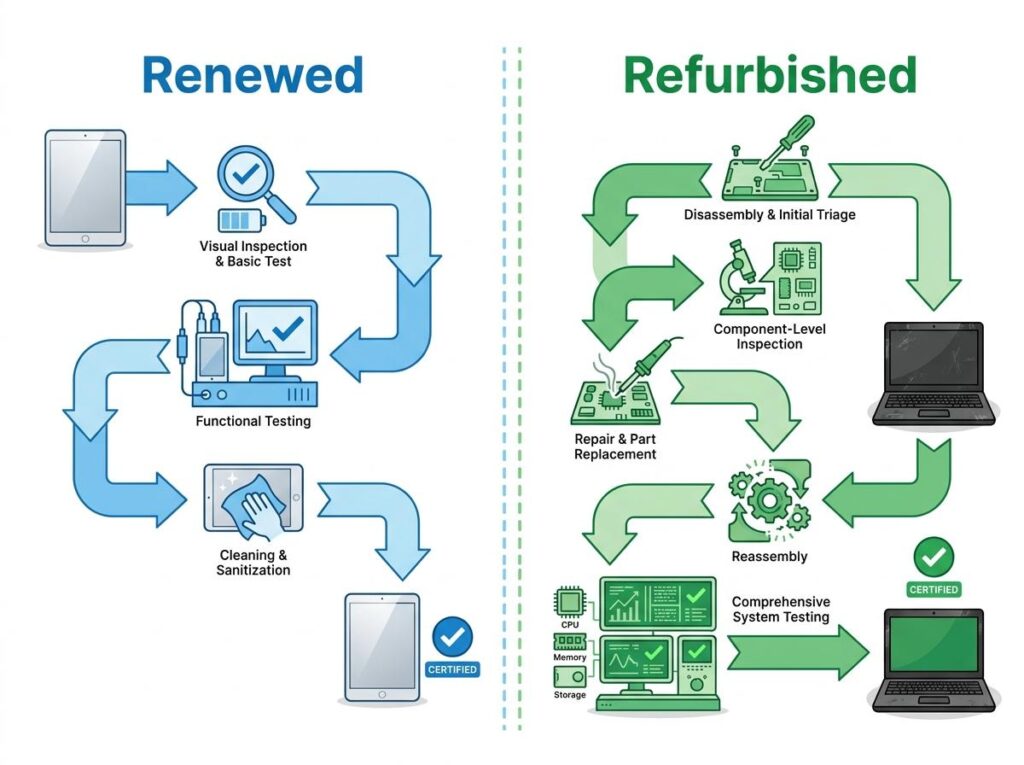
Renewed and refurbished devices follow different inspection and testing protocols before reaching the market
The second-hand electronics market reached an estimated $139.5 billion in 2025 and is projected to hit $153.4 billion in 2026, according to Global Market Insights, growing at a compound annual rate of 7.2%. More devices are entering the circular economy than ever before. But the language used to describe them (renewed, refurbished, certified pre-owned, factory recertified) has become a source of confusion, not clarity.
For engineering professionals and technical procurement teams, this is more than a semantic issue. Choosing between a renewed laptop and a refurbished one can affect warranty coverage, expected performance, and the reliability of the equipment being specified. Yet the industry has no single governing body that standardizes these terms. Amazon defines “renewed” one way. Apple’s certified refurbished program follows a different set of criteria. Independent third-party refurbishers operate on yet another set of standards.
This article examines the technical distinctions between renewed and refurbished electronics from an engineering standpoint. We look at the testing protocols, grading tiers, environmental implications, and procurement considerations that sit behind each label. The goal is to give engineers and researchers a practical framework for evaluating second-hand electronic equipment based on process, not marketing.
What do “renewed” and “refurbished” actually mean?
“Refurbished” is the broader, older term. It describes any electronic device that has been returned, inspected, repaired where needed, tested, and restored to full working condition. The process typically involves multi-point diagnostic testing, component-level repair or replacement, data sanitization, cosmetic assessment, and a final quality check before repackaging. Refurbishment can happen at the original manufacturer, at a specialized third-party facility, or even at a local repair shop. The scope and rigor of the process vary widely depending on who performs it.
“Renewed” is a newer, marketplace-specific certification. Amazon Renewed is the best-known example, and it applies a standardized set of criteria that all sellers in the program must meet: minimum 80% battery capacity on portable devices, certified data wipe, no visible cosmetic damage from 12 inches away, and full functionality testing. Devices are graded across four tiers (Premium, Excellent, Good, and Acceptable), with warranty coverage ranging from 90 days to one year depending on the tier and region.
The core distinction is regulatory, not technical. All renewed devices are refurbished, but not all refurbished devices meet the inspection standards required for renewed certification. For engineers evaluating equipment, understanding the renewed vs refurbished difference is the first step in matching product condition to application requirements. A renewed smartphone may be perfectly adequate for general office use, while a non-renewed refurbished server might be the better choice for a lab environment where cosmetic condition is irrelevant and component-level specifications matter more.
Quality tiers and testing protocols
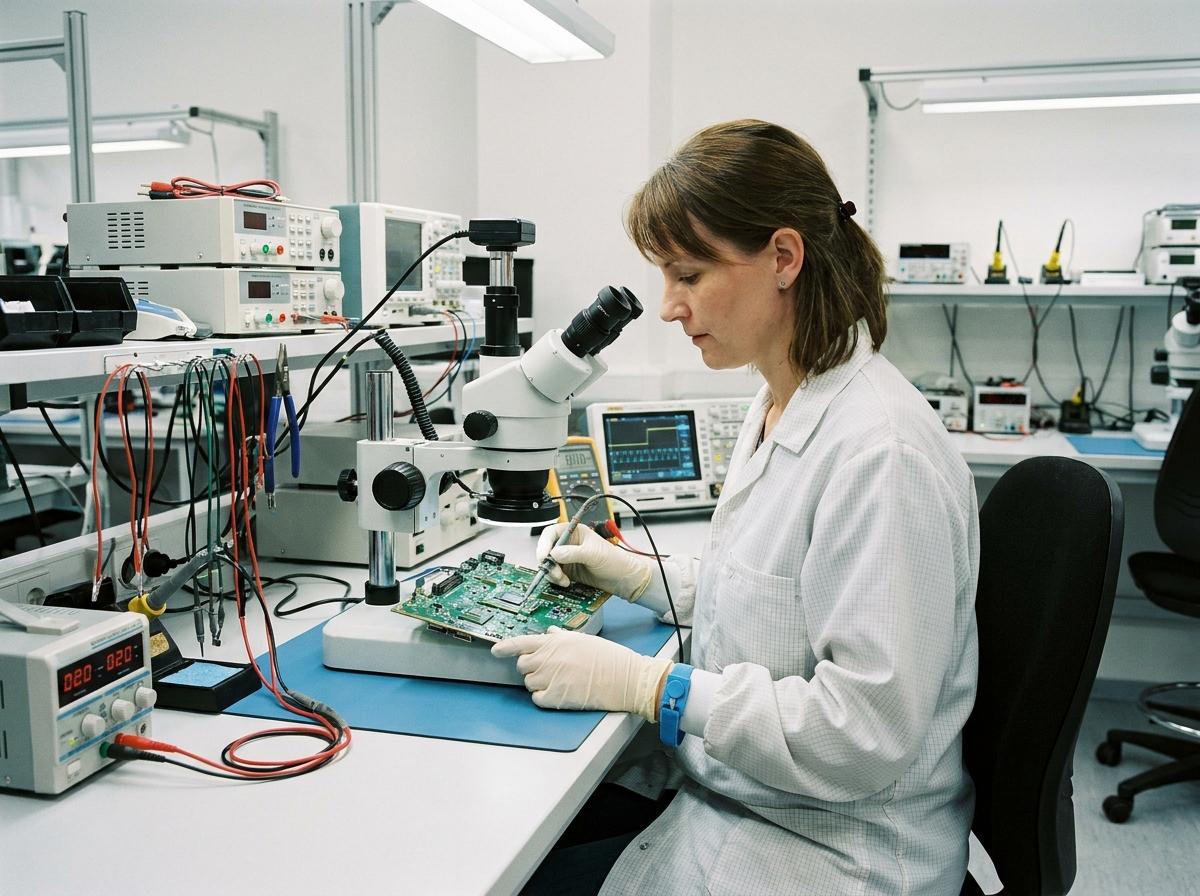
Professional refurbishment involves multi-point diagnostic testing and component-level repair
Not all refurbished devices are equal. The market operates across several distinct quality tiers, each with its own testing regimen and warranty structure.
Manufacturer-certified refurbished devices represent the highest tier. Apple, Samsung, and Dell operate programs in which returned units undergo full factory restoration: new outer shells, fresh batteries, replacement of any worn components, and thorough functionality testing. These devices carry the same one-year warranty as new products and are effectively indistinguishable from retail units in performance. The tradeoff is price. Manufacturer-certified devices typically sell for 15 to 25 percent below new, whereas third-party refurbished units can reach 30 to 50 percent savings.
Amazon Renewed’s four-tier grading system adds another layer of specificity. At the top, Premium devices show no signs of use. The Excellent tier allows for light cosmetic wear, while Good accepts minor dents and scratches that don’t affect function. Acceptable is the entry point: visible wear is permitted as long as the device operates correctly. This tiered approach gives buyers a clear tradeoff between cosmetic condition and cost.
Independent third-party refurbishers operate with more variability. The best facilities follow ANSI/RIC standards for the refurbishment and reuse of ICT equipment, but no single certification applies across the industry. A 2025 study by Fraunhofer UMSICHT and Interzero found that professional refurbishment adds measurable value by ensuring devices meet performance benchmarks, but the study also noted that inconsistent testing protocols across refurbishers remain a barrier to buyer confidence. Engineers specifying refurbished equipment should request the specific testing criteria each supplier uses rather than relying on labels alone.
Environmental impact and lifecycle considerations
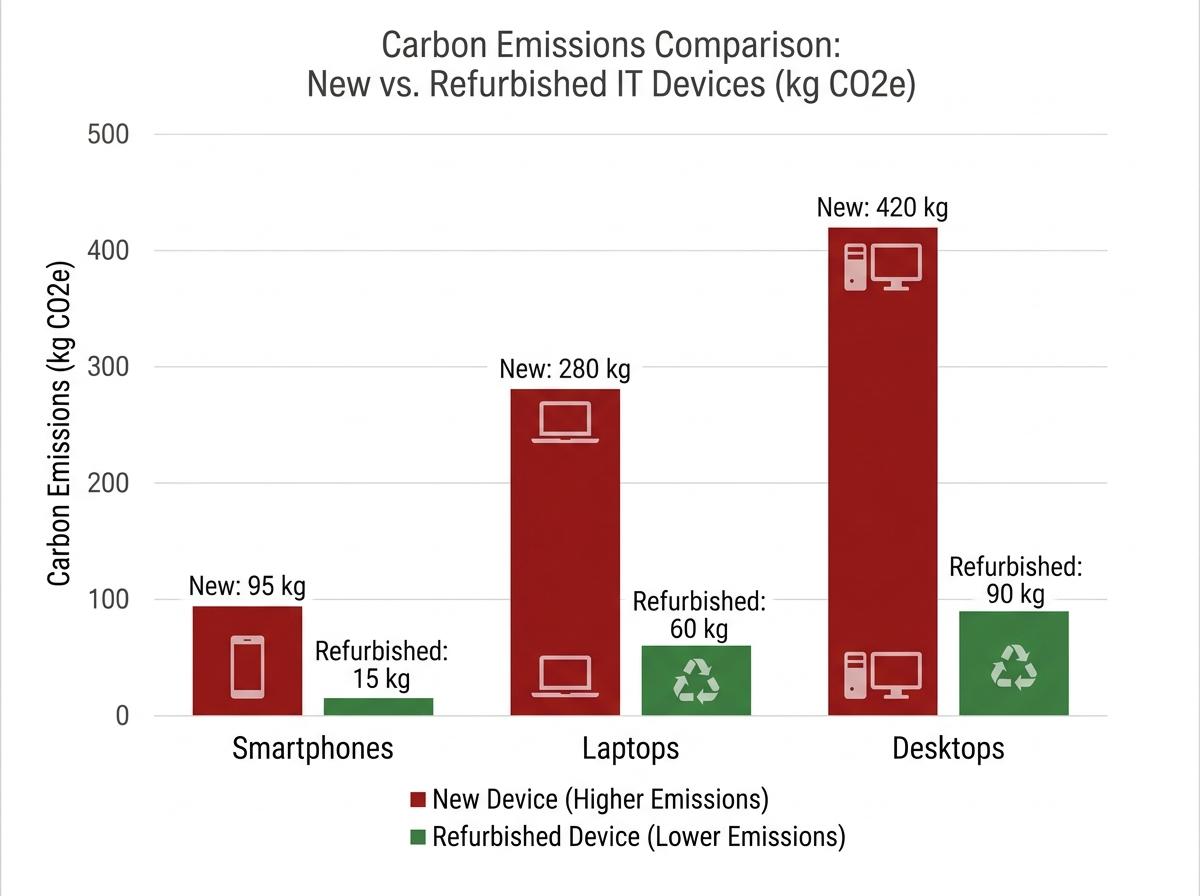
Refurbished ICT devices produce 18% to 37% fewer greenhouse gas emissions compared to new manufacturing based on 2025 Fraunhofer data
The environmental case for refurbished electronics rests on a straightforward lifecycle principle: the majority of a device’s carbon footprint comes from manufacturing, not use. A smartphone’s production phase accounts for roughly 80% of its total lifecycle emissions, according to multiple lifecycle assessment studies. Extending a device’s usable life through refurbishment avoids those manufacturing emissions almost entirely.
The 2025 Fraunhofer UMSICHT study commissioned by Interzero quantified the savings across three device categories. Refurbished smartphones produce about 37% fewer greenhouse gas emissions (saving approximately 34.7 kg CO2e per device) compared to new manufacturing. Refurbished laptops save about 31% (107 kg CO2e). Refurbished desktop PCs save about 18% (163 kg CO2e). The savings are lower for desktops because their manufacturing emissions are distributed across more components, but the absolute CO2e reduction per device is actually largest for this category.
A 2026 study in Nature Communications Earth and Environment found that each second-hand smartphone displaces 0.40 new devices from being manufactured, reducing overall manufacturing demand by 15% at current market levels. The same study reported that circular economy users have a 34% lower annual carbon footprint: 7.9 kg CO2e per year versus 13.5 kg CO2e for linear consumption users.
These data become more urgent when viewed against the scale of global e-waste. The UN Global E-waste Monitor 2024, published by UNITAR and the ITU, reported that 62 million tonnes of e-waste were generated globally in 2022. That figure is growing five times faster than formal recycling rates, and only 22.3% of e-waste was formally collected and recycled. An estimated $62 billion in recoverable materials (copper, gold, silver, palladium, rare earth elements) is lost annually to improper disposal. These numbers highlight the structural gap between the circular economy’s potential and its current reality, a gap that better grading standards and refurbishment infrastructure can help close.
For engineers working on sustainability initiatives, the topic connects directly to broader conversations about e-waste management practices and challenges documented in IJERT’s own research. Proper refurbishment and reuse sit at the intersection of materials science, supply chain logistics, and environmental policy.
Why terminology matters for procurement decisions

Understanding grading terminology helps engineers and procurement teams make informed equipment decisions
For organizations with sustainability mandates, specifying refurbished IT equipment is no longer a cost-saving afterthought. It’s an explicit procurement strategy. Global Market Insights reports that individual consumers currently hold 72% of the second-hand electronics market by volume, but corporate and institutional buyers represent the fastest-growing segment as ESG reporting requirements tighten.
The challenge for procurement engineers is that labeling terms carry different weight depending on the supplier. A “refurbished” server from a manufacturer-certified program has undergone factory-level diagnostics and carries a full warranty. A “refurbished” server from an uncertified reseller may have received nothing more than a visual inspection and a power-on test. The same word describes two completely different levels of quality assurance.
This is where process transparency matters more than terminology. Engineers evaluating suppliers should ask four questions: What diagnostic tests are performed? Are components replaced or only repaired? What is the warranty period and what does it cover? Does the supplier follow any recognized refurbishment standard, such as the ANSI/RIC RES-1 or the R2 certification for electronics recyclers?
The role of grading standards in reducing improper disposal of electrical and electronic equipment is well established in the engineering literature. When procurement teams can reliably distinguish between high-quality refurbished units and minimally inspected used equipment, they make better purchasing decisions that support both operational reliability and environmental goals. Research on recycling’s role in environmental preservation further reinforces the case for structured reuse programs.
Moving toward standardized grading
The electronics industry doesn’t lack for refurbishment capacity. What it lacks is a shared vocabulary. The terms “renewed” and “refurbished” describe overlapping processes with different levels of standardization, and the gap between them is where buyer confusion lives.
For the engineering community, the path forward involves pushing for clearer definitions. Organizations such as the IEEE and the International Electrotechnical Commission have begun exploring standards for circular electronics, but no universally adopted classification system exists yet. In the meantime, the practical approach is to evaluate devices by their testing history rather than their marketing label.
All renewed devices are refurbished. Not all refurbished devices are renewed. What matters is what happens to the device before it reaches your hands, and that is an engineering question, not a marketing one.

