


 DOI : 10.17577/
Introduction
Servo drives are electronic control devices that regulate the motion of servo motors with high accuracy and responsiveness in automated machinery.
Modern factories rely on these systems because precise motion determines the quality, speed, and reliability of manufacturing operations.
Industrial automation has grown rapidly in the last decade. According to the International Federation of Robotics, global factories now operate more than four million industrial robots. Each of those robots depends on precise motor control to move accurately and repeat tasks thousands of times without error.
Servo drive technology plays a major role in this process. These devices control motor speed, torque, and position while continuously adjusting motion in response to sensor feedback.
This article explains what servo drives are, how they work, their advantages and limitations, and where they are used in modern manufacturing.
What Are Servo Drives?
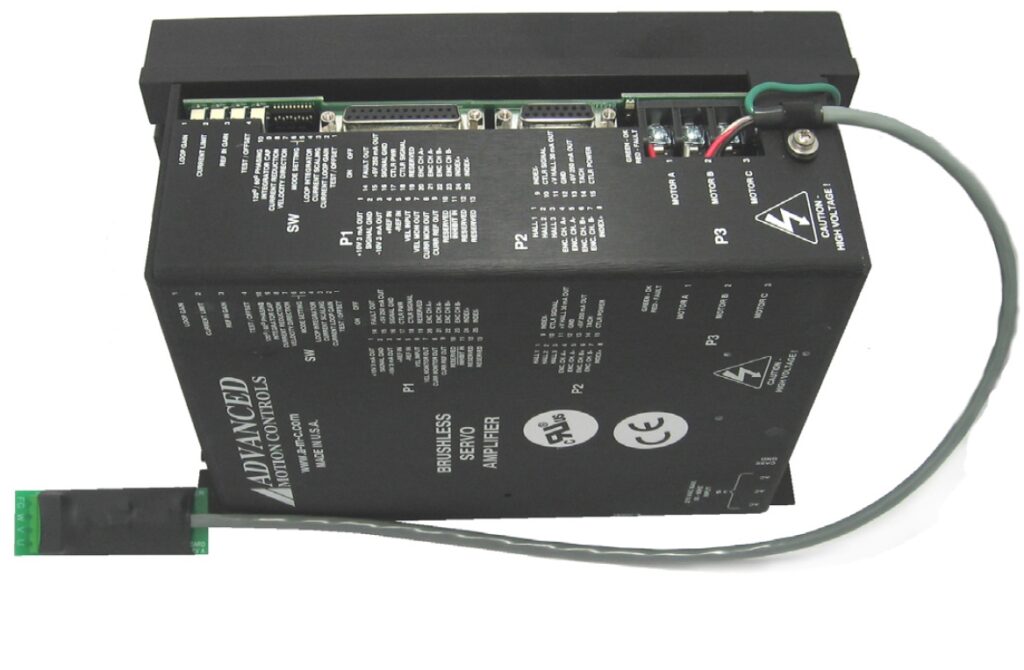
Servo drives are electronic devices that control servo motors by converting command signals from a controller into controlled electrical power.
In simple terms, a servo drive tells a motor exactly how to move and constantly adjusts the motion to maintain precision.
Manufacturing machines require precise positioning to cut, assemble, package, or move parts accurately. Servo drives enable that precision by managing the electrical signals that determine motor behavior.
Many engineers evaluating servo motor drives focus on response time, accuracy, and compatibility with control systems.
These characteristics determine whether a machine can maintain tight tolerances and operate smoothly at high speeds.
What Are the Main Types of Servo Drives?
Servo drive types are categories of motion control systems grouped by power architecture and control technology.
Different types are used depending on the machine design and automation requirements.
The three main types are:
- AC servo drives
AC servo drives are widely used in industrial automation because they provide high efficiency, reliable torque control, and fast response. - DC servo drives
DC servo drives are typically used in older or specialized equipment that still uses DC motors. - Digital servo drives
Digital servo drives use embedded processors to improve performance, communication, diagnostics, and system tuning.
How Do Servo Drives Work in Industrial Automation?
Servo drives operate by receiving commands from a controller, powering a motor accordingly, and adjusting their output based on sensor feedback.
The definitive purpose of a servo drive is to ensure that actual motor motion matches the commanded motion.
A motion controller sends instructions related to speed, position, or torque.
The servo drive interprets the signal and supplies power to the motor.
Sensors such as encoders monitor the motor’s position and speed.
If the motor deviates from the commanded motion, the drive instantly adjusts the output to correct the error.
This constant adjustment creates accurate, repeatable motion, which is essential for automated production.
What Are the Main Components of a Servo Drive System?
A servo drive system is a motion-control assembly that combines several components to produce precise mechanical motion.
Each component contributes to maintaining accuracy and system stability.
The main components are:
- Servo motor – converts electrical energy into controlled mechanical motion.
- Servo drive controller – regulates electrical power and motor behavior.
- Feedback device – measures position or speed through an encoder or resolver
- Motion controller – sends motion commands to the servo drive.
- Power supply – provides electrical energy to the system.
What Is a Closed-Loop Control System?
A closed-loop control system is a control method that continuously compares the desired motion with the actual motion and corrects any differences.
Servo systems depend on this feedback process to maintain accuracy.
If a machine axis overshoots its target or moves too slowly, the feedback signal triggers an alert to the servo drive.
The drive then adjusts the motor output to eliminate the error.
This closed-loop correction enables machines to perform highly precise tasks repeatedly without losing accuracy.
What Are the Advantages of Servo Drives in Precision Automation?
Servo drives provide several major advantages that improve manufacturing performance.
These advantages include better accuracy, higher efficiency, and faster system response.
The six key advantages are:
- Improve positioning accuracy by continuously correcting motion errors.
- Increase machine efficiency through faster acceleration and cycle times.
- Reduce energy consumption by delivering only the required motor power.
- Enable high-speed automation with rapid response and smooth motion control.
- Enhance system flexibility by allowing programmable motion profiles.
- Support advanced robotics that require precise multi-axis coordination.
What Are the Limitations of Servo Drives?
Servo drives also present several limitations related to cost and complexity.
Although they offer superior performance, they are not always necessary for simpler machines.
The four main limitations are:
- Increase equipment costs because servo motors, drives, and sensors must be carefully matched.
- Requires complex configuration to properly tune control parameters.
- Demand specialized maintenance knowledge for troubleshooting and system optimization
- Depend on accurate feedback devices because poor sensor data reduces system precision.
Servo Drives vs Variable Frequency Drives
Servo drives and variable frequency drives serve different purposes in industrial motor control.
Servo drives control position, speed, and torque with high precision, while VFDs mainly control motor speed.
VFD systems are suitable for applications such as pumps, fans, and conveyors where precise positioning is not necessary.
Servo drives are used when machines must move to exact locations or perform synchronized multi-axis motion.
| Factor | Servo Drive | VFD |
| Primary function | Position, speed, and torque control | Speed control |
| Feedback system | Closed loop | Often open loop |
| Response speed | Very fast | Moderate |
| Accuracy | High | Lower |
| Typical use | Robotics, CNC, automation | Pumps, conveyors |
What Are the Main Applications of Servo Drives in Manufacturing?
Servo drives are widely used in industries that require precise and repeatable motion.
Automation systems rely on servo technology to maintain consistent quality and production speed.
The six most common applications are:
- CNC machining systems are used for milling, turning, and drilling operations
- Industrial robotics is used in welding, assembly, and material handling.
- Packaging machines used for labeling and sealing products
- Semiconductor manufacturing equipment used for ultra-precise positioning
- Automated assembly lines are used for repetitive mechanical tasks.
- Precision sheet metal fabrication where exact positioning controls forming accuracy
CNC Machines
CNC machines are computer-controlled manufacturing machines that cut or shape materials using programmed tool paths.
Servo drives control the machine axes and ensure accurate positioning of the cutting tool.
The precision of CNC machines depends heavily on the stability and responsiveness of the drive system.
Servo drives enable machines to maintain tight tolerances even at high speeds.
This level of motion control is also important in automated sheet metal systems such as CNC press brake machines, where bending angles and backgauge positioning must remain consistent.
Industrial Robots
Industrial robots are programmable mechanical devices used to automate tasks such as welding, packaging, assembly, and material handling.
Each robotic joint relies on servo drives to control position, speed, and torque.
Servo technology enables robots to move smoothly and accurately while coordinating multiple axes.
This coordination allows robots to perform complex tasks with high repeatability in modern production lines.
What Are Important Factors When Selecting Servo Drives?
Choosing the correct servo drive requires evaluating several engineering parameters related to machine performance.
Selecting the wrong drive can reduce efficiency and system reliability.
The five most important selection factors are:
- Torque and power requirements needed to move the mechanical load
- Control interface compatibility with existing automation systems
- Feedback device type, such as an encoder or a resolver
- Communication protocols used in industrial networks
- Environmental conditions, including temperature, dust, and vibration
What Does a Servo Drive System Cost?
Servo drive system cost varies depending on performance, size, and application requirements.
Basic systems are relatively affordable, while advanced industrial systems can be more expensive.
Typical price ranges include:
- Small systems: $200 to $800
- Medium industrial systems: $800 to $3,000
- High-performance systems: $3,000 to $10,000+
The five main cost factors are:
- Motor power rating
- Drive performance and accuracy level
- Communication and networking capabilities
- Manufacturer and brand support
- Application complexity
How to Integrate Servo Drives Into an Automated Manufacturing System
Integrating servo drives into an automation system requires several steps that ensure the drive, motor, and control system operate correctly together.
There are five main steps involved in this process.
- Define the machine’s motion control requirements.
- Select a compatible servo motor and drive.
- Configure the control system and feedback devices.
- Tune the drive parameters for stable performance.
- Test and optimize the system under real operating conditions
Proper integration ensures that the machine performs reliably and achieves the desired precision.
What Is the Future of Servo Drive Technology in Smart Manufacturing?
Servo drive technology will continue evolving as factories adopt Industry 4.0 technologies and smart manufacturing systems.
Modern automation increasingly depends on intelligent motion control systems.
Future servo drives will integrate with IoT platforms, predictive maintenance systems, and AI-based control algorithms.
These capabilities will allow machines to detect performance issues early and optimize motion automatically.
As manufacturing becomes increasingly connected and automated, servo drives will remain a key technology enabling precise, efficient production.
Conclusion
Servo drives are essential components of modern automation systems because they control motor motion with exceptional precision and responsiveness.
They enable robots, CNC machines, and automated production equipment to operate efficiently and accurately.
Although servo systems require careful setup and investment, their performance advantages make them indispensable in high-precision manufacturing environments.
As smart factories and robotics continue expanding worldwide, servo drives will remain at the center of the technologies that power modern manufacturing.

